01 / RESPONSIBLE MATERIALS
Materials that make sense
Choose for durability and local suitability. A considered materials schedule could reduce waste and unnecessary purchases. Compare lifecycle performance and appropriate lower-impact alternatives with a qualified professional, using technical evidence rather than a green label alone.
02 / RESOURCE-EFFICIENT HOMES
Comfort by design
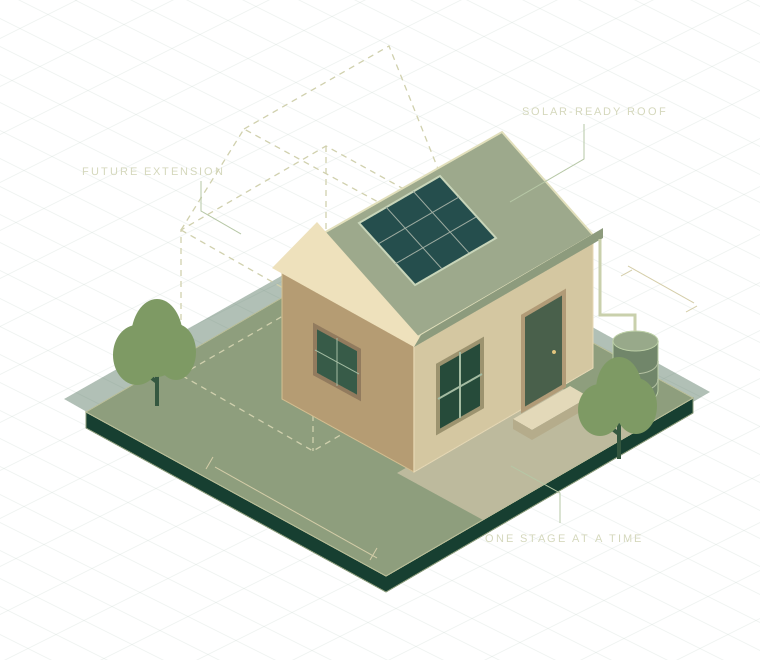
Consider passive cooling, natural ventilation, shade and daylight from the first plans. Efficient fittings, rainwater considerations and energy-efficient systems can shape the design, with future solar readiness where suitable. Safe water and energy systems need professional design and relevant approvals.
03 / CLIMATE RESILIENCE
Ready for the seasons ahead
Discuss site drainage, roof performance, heat exposure and local weather risks early. Details that manage rain and heat, alongside access for maintenance, could support a home’s long-term resilience. The right response depends on the site, design and local conditions.
04 / GREEN-BUILDING DOCUMENTATION
Keep the evidence with the build
Proposed material records, stage inspection records and evidence of selected sustainability features would help explain what was built and why. Future lender-specific requirements, verification methods and applicable green criteria still need to be agreed.
ⓘThese considerations are illustrative and subject to qualified professional advice, site conditions and applicable approvals. No proprietary green certification is offered. Any future mortgage handover is subject to lender assessment and approval.